With the world’s population projected to reach 10 billion people in the next 30 years, it is reasonable to wonder: what will the future landscapes of food production look like? Or should we say… seascapes. In this episode, Kendall Jefferys and Lauren A. Mariolis explore the potential and pitfalls of aquaculture.
Listen Now
Episode Hosts

Kendall Jefferys, undergraduate student at Duke University, research advised by Dr. David Gill
Kendall is a senior at Duke University, majoring in Environmental Science and Policy as well as English. Her current research examines governance and social-ecological impacts of marine protected areas in Indonesia. She has also researched with the Duke Marine Robotics and Remote Sensing Lab, exploring how remote sensing technology can monitor land cover change in the coastal Southeast. Kendall is a Rachel Carson Scholar and a fellow at the Rachel Carson Council.
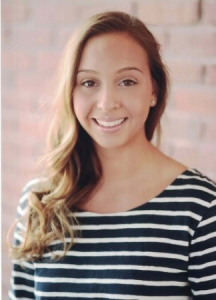
Lauren A. Mariolis, Master of Environmental Management ‘20
Lauren is a recent graduate from the Nicholas School of the Environment at Duke University. Her master’s project focused on the process of coastal gentrification and the impacts this has on fishing communities’ economy and cultural identity. She also interned at Chesapeake Conservancy to institutionalize Diversity, Equity, Inclusion, and Justice into the organization’s internal operations and programming efforts to foster conservation practices that are rooted in social justice. Lauren is passionate about pursuing a career that cultivates healthy socioecological relationships and rehabilitates coastal ecosystems in ways that are economically viable, socially just, and environmentally sustainable.
Instagram:@laurieanastasia
Interviewees
Series Host
Dr. Lisa Campbell hosts the Conservation and Development series. The series showcases the work of students who produce podcasts as part of their term projects. Lisa introduced a podcast assignment after 16 years of teaching, in an effort to direct student energy and effort to a project that would enjoy a wider audience.
Twitter: @lismarcam

Large oyster seed. Photo: Down East Mariculture Oyster growing cages Down East, NC. Photo: Luke Fairbanks Oyster shucking. Photo: Luke Fairbanks


Supplemental material for this episode
TRANSCRIPT
Seas the Day – Episode 03
Aquaculture: A New Food Frontier? (Conservation and Development Series)
Theme Music
Lisa Campbell: Hey listeners, welcome to Seas the Day, a podcast from the Duke University Marine Lab. I’m your host Lisa Campbell, and today we bring you an episode from our Conservation and Development Series. The series features episodes produced by students who participate in my course of the same name, and in that course we explore historical and contemporary approaches to conservation and development, how people, organizations, and governments understand these terms, and the efforts they make to try and reconcile the often competing goals for conservation and development in practice.
Students produce a podcast for their term project rather than a typical research paper, but there is a catch. The course is taught in a block teaching format, and that means what would normally be taught over a 12 week semester is delivered in just three and a half weeks. So, it’s pretty intense! Students who usually have no experience with podcasting, managed to identify and research a topic and write and produce a podcast on it in that short time frame. I hope you’ll agree that the results are pretty impressive.
This week’s episode concerns aquaculture, sometimes called fish or shellfish farming, and it was produced by Kendall Jefferys and Lauren Mariolis in January 2020. Kendall and Lauren reflect on the environmental, cultural, political, and economic impacts of aquaculture in the United States, and they ask Duke faculty and other experts to weigh in on the role of aquaculture as a new food frontier. Enjoy!
Kendall Jefferys: Imagine you’re sitting down at the dinner table after a long day. Picture what’s at the center of your plate. Now that you have that image, what if I told you that the plate of your future may look very different.
Bren Smith, a fisherman who practices what he calls Restorative Ocean Farming, believes that seaweed and bivalves like oysters, mussels, and clams should be moved to the center of our plates. But if you live in the US, meats such as chicken and beef most likely dominates the dinner table. In fact, in 2018 the average American ate 222 pounds of meat in a year, which converted to daily consumption is twice the amount that nutritionists recommend. This is not only a health concern, but an environmental one.
Conventional agriculture takes a toll on our planet. Livestock farming is the leading emitter of greenhouse gases worldwide. Runoff from fertilizers creates algal blooms and dead zones in our lakes and oceans. Pesticides threaten bee populations and arable land is limited. Undoubtedly there are efforts in sustainable agriculture to affect positive food systems change, but feeding a growing population may increasingly rely on a different sector of food production altogether – Aquaculture. Of course, changing our food systems is complicated, and the role of aquaculture within our food systems is equally complex. In this episode, we hope to shine some light on these murky waters, but it’s up to you to jump in!
Musical Interlude 3:29
Lauren Mariolis: You’re listening to Conservation and Development. I’m Lauren and I’m Kendall. And today we’ll be diving into the depths of aquaculture. You’ll hear from us, some wonderful researchers, and experts. And together we’ll explore the potential and pitfalls of aquaculture. Can traditional fishing communities survive aquaculture expansion? Will the United States be able to eliminate its seafood trade deficit? And, what does this all mean for our people and our planet?
Kendall: We don’t have all the answers to these questions, but we hope the exploration of real cases and our conversations with experts will help in a more holistic picture of aquaculture. So, Lauren, can you tell me what ocean aquaculture really looks like?
Lauren: I want you to imagine the big, blue beautiful ocean, a vast seascape filled with marine life, a complex ecosystem that has adopted over 3 1/2 billion years.
Kendall: Ok, got it.
Lauren: Now imagine you’re soaring next to the seagulls above the water, below you see rows of rings adorning the sea and eye-catching patterns like crop circles. Next, you take a dive straight into the middle of one of those rings, and suddenly you find yourself floating in a net brimming with fish. This is just one of the many types of technology used to farm fish in the ocean. Some operations use large underwater cages that have complex geometric shapes, looking a little like floating Tetris configurations. Ah, Kendall?
Kendall: Sorry, sorry had my head in the clouds or sea I guess, but I’m back now. So, before we immerse our listeners, why don’t we talk about what we mean when we say aquaculture. Ok, so first there are numerous species that can be farmed: such as shellfish like mussels, finfish like salmon, or plants like seaweed. Additionally, aquaculture takes place in many environments: from freshwater lakes, to indoor facilities, all the way to the open ocean. So, when we say aquaculture, we simply mean cultivating aquatic organisms.
Ok, now I’ve already talked about some of the problems with agriculture and its impacts on the planet, but let’s turn our focus to the ocean. Some alarming trends are evident in our wild-capture fisheries. The Food and Agriculture Organization released a report in 2018, telling us that wild-capture fishery production has plateaued in the last 40 years, and 93% of wild fisheries are classified as overfished or at maximum capacity.
Lauren: That is alarming! Especially considering that demand for seafood is rising across the globe. In fact, within the last 50 years, global demand for seafood has more than doubled. For example, in the United States between 1997 and now, there has been an almost 10% increase in per capita seafood consumption, and the global population is projected to reach almost 10 billion in the next 30 years. It sounds like there may be a problem here. How will we feed a growing population that wants more and more seafood?
Kendall: Well Lauren, I think that’s where aquaculture comes in. It is responsible for almost half of global fish production, meaning aquaculture is filling the gap between a rising seafood demand and declining fish landings. Interestingly, despite the fact that the United States is the second largest consumer of seafood, the country does not have a large aquaculture industry. In fact, the United States produces very little seafood domestically, and according to the National Oceanic and Atmospheric Administration or NOAA, the US imports more than 80% of the seafood we eat.
Lauren: It seems like there may be a huge potential for aquaculture to grow in the United States.
Kendall: I think so too, Lauren, but what would the growth of a domestic aquaculture industry really look like?
Lauren: Why don’t we start with an example that’s close to home?
Musical Interlude
Lauren: North Carolina has a deep connection to the sea with fishing dating back to at least the 17th century. The coast has been shaped by generations of fishers and a fishing centered economy. And to this day, maritime heritage defines social and cultural fabric of the state. But in more recent years, economic and social change has swept over the coast, and this way of life has become closer and closer to disappearing.
And, so, our story begins in the 1940s, and a bustling fishing town situated in Downeast, North Carolina. Elmer Willis and his brother started a seafood business and opened a clam house in Williston. In just a few years, almost everyone in the community worked there. Besides selling clams to big name companies like Heinz, the business also raised money for local schools through community clambakes. Eventually, the clam house became an important staple to the community’s identity and well-being. Thirty years later, Elmer Willis died unexpectedly, and so, the clam house closed. As of 2015, the building remained, albeit, empty and decrepit. Acting as a symbol of a once vibrant self-sufficient fishing community and a reminder that this was no longer the way of life in Williston.
But now, the once empty clam house is a lively home for thousands of oyster seedlings that fill dozens of 50-gallon tanks. Susan Fulcher Hill and her husband opened Downeast Mariculture Supply Company just a few years ago. Susan grew up in Williston, and as the daughter of a commercial fisherman, the sea is in her blood. With deep connections to Downeast and the commercial fishing industry, she bought the 8000 square foot building and hopes that the business may help North Carolina’s oyster industry and revitalize her community by creating new jobs in a new but familiar industry.
Kendall: That sounds really interesting, but I’ve also heard that aquaculture Downeast is controversial, and many people are concerned about its impacts. But there does seem to be the potential that oyster aquaculture could be a way to revive a once thriving industry and help to rehabilitate fishing communities. Susan seems to think so. I wonder why other people are concerned about it?
Lauren: You know what, I think this is a perfect opportunity to call Grant Murray over at the Duke University Marine Lab. He is a Social science researcher and may be able to provide some insight here.
Musical Interlude – phone ringing
Lauren: Grant, hello.
Grant Murray: Oh, hi, Lauren. Hi, Kendall. Thanks for your call.
Kendall: Ok, so we have a question for you. Lauren and I have been chatting about the up and coming oyster aquaculture industry. We just talked about this really interesting story about a new oyster hatchery in Williston, NC. And we’re wondering about the social implications of Aquaculture. Could you shed some light on what is at stake regarding social and cultural well-being?
Grant Murray: So, this notion of well-being is a way to think more holistically about impacts of an action, including something like the growth of ocean aquaculture. So, one way that I focus my energies is on the social and cultural impacts of ocean aquaculture. And, I kind of lumped them into three broad categories. And one is what I’ll call alienation. And alienation just means that that a person feels that they are alienated from the ocean space, from doing what they would otherwise be able to do, or to appreciate by the presence of, in this case, aquaculture. So, for example, if an ocean aquaculture salmon net/pen farm, or even an oyster lease comes into a space, the nature of that space changes, and the way that people interact with that space changes. So, for example, people may not be able to hike along the shoreline there and see the same kind of view-scape as they had before. There is a sense that that space has been lost to something else, and that impact or those sets of impacts can run from, you know, something like view-scape, to the loss of a family tradition, to the loss of a recreational activity.
The second big category I would talk about is identity. And some commercial fishers see aquaculture as a different kind of activity that benefits different kinds of people, and that will compete and threaten an identity, identity closely associated with fishing. And commercial fishing communities, fishing communities generally have a, tend to have a really strong sense of identity built around that activity. And aquaculture, because it’s also producing seafood and sometimes physically displacing people from those spaces, can be seen as a threat or an intrusion on that, on those traditions in that culture and you know a sense of threat to identity. Now it’s also true that some people see it, oh no, that’s, you know, it’s actually a compliment. It’s a way to rehabilitate traditional fishing communities. It’s a way to compliment seafood production or to be an ally to traditional fishing and to keep fishing communities alive and healthy. So, it’s a point of contention. It’s not that all people feel one way or the other about the loss of, or the threat to identity. In fact, some people see it as an asset to identity.
Lauren: How interesting that you bring this up. I actually spoke with the owner of the Williston Oyster Hatchery, and she seems to think that aquaculture could help revive the traditional fishing communities she grew up in. Anyways, what’s the third category?
Grant Murray: The third major category, I would broadly lump under the term equity or even fairness. So, aquaculture is in some places a new activity that is creating, as any activity does, winners and losers. Some people benefit; some people don’t benefit. Some people pay more or less costs. And that social differentiation, the fact that your neighbor is gaining or losing can create some feelings of inequity or unfairness. And that causes some social issues—that lack of fairness amongst one’s community can itself become a problem and a point of division.
Kendall: Thanks, Grant. It sounds like aquaculture could post some serious threats at the local level, such as replacing or even displacing traditional uses of ocean space by fishing communities whose identity and ways of life are strongly tide to the ocean.
Lauren: There are also questions of equity too. As Grant told us, some people may benefit from the expansion of aquaculture while others may not.
Kendall: That point really reminds me of a story I heard recently about net/pen aquaculture off the coast of Washington and the impact it had on the Lummi Nation tribe and the environment. Which we haven’t talked about yet.
Lauren: Why don’t you tell me about the story?
Kendall: Ok, so I think this article written by Tammy Kim in The New Yorker sums it up really nicely. Let me read a section for you. Quote. On August 22nd Cooke Aquaculture, a multibillion-dollar seafood company, reported that three days earlier, extreme tides, coinciding with the total solar eclipse, had torn apart its enormous salmon farm. More than 300,000 non-native Atlantic salmon housed in steel underwater pens were at risk of escape. Tens-of-thousands of fish had already spilled into Puget Sound, and some had begun to instinctively swim upstream, toward the mouths of local rivers, as if to spawn. Unquote.
The article goes on to detail that the salmon pen break led the Lummi Nation tribe to declare a state-of-emergency. The Lummi are an indigenous group native to Western Washington state. By the end, 150,000 Atlantic salmon spilled into the Pacific, 40,000 of which the Lummi Nation tribe worked tirelessly over days to recapture. But before the net pens even broke, local members of the Lummi tribe opposed the salmon farm, viewing it as a threat to local species of Pacific King, Silver, and Chum salmon that the Lummi fishers depend upon.
Lauren: That sounds like an environmental mess!
Kendall: So environmental concerns about aquaculture are mainly centered around pollution, excessive fish waste, uneaten feed, and chemicals used to treat farmed fish can cause nutrient overloading. This means that marine life and their habitats could experience irreversible damage. But as far as fish escapes are concerned, the main issue is genetic mixing of farmed and wild fish. But in this case, there may be as many social and cultural concerns as environmental ones. Fish and Wildlife biologists suggests that there is little mating success between Atlantic and Pacific salmon. Regardless, Lummi fishermen feel that Atlantic salmon simply don’t belong in the same waters as the Pacific salmon they find sacred.
Lauren: So, a tension seems to be very present here between science corporations and local tribes.
Kendall: Right. I mean, as Grant discusses, the introduction of a new economic activity to a community can create social inequity, as some benefit, while others find their livelihood threatened. Like in the case of Lummi fishermen. In fact, the tribe took political action in 2018, leading to the passage of a bill that sets salmon net/pen aquaculture to be phased out in Washington state by 2025.
Lauren: Ha. That brings up a very interesting question, Kendall. Now I’m really curious about what kind of policy frameworks exist in the United States for aquaculture?
Kendall: It’s a good question. I mean, we just talked about the ban of salmon aquaculture in Washington.
Lauren: Right. And even Alaska, Oregon, and California have banned open-ocean aquaculture, which raises some questions. Do individual states have policy frameworks in place? Who has jurisdiction over the management of aquaculture, anyways?
Kendall: I don’t know Lauren. Let’s call Luke Fairbanks. He’s an environmental social scientist from the University of Southern Mississippi’s Gulf Coast Research Laboratory. A lot of his work focuses on human environment interactions related to coastal communities, governance, and policy. I think he can help us.
Musical Interlude – phone ringing
Lauren: Luke, hello.
Luke Fairbanks: Hi, Lauren and Kendall. Thanks for getting in touch with me.
Kendall: So, Lauren and I have been talking about questions surrounding aquaculture policy in the United States. We also know that there has been increasing interest in expanding seafood production through aquaculture. Do you believe that this is politically and institutionally possible? What are some of the opportunities and constraints?
Luke Fairbanks: But I think we’re kind of at a point in time where there’s probably more momentum behind marine aquaculture in the U.S. than there’s probably been in at least a decade, maybe two. You know, I think I think the real challenge though, is whether and how that political momentum can overcome some of the institutional barriers to the sector. You know, in the coastal zone at the state level, it’s really a mixed bag state-by-state. Some states have a long history of aquaculture, things like shellfish farming that can go back centuries in some places. You know, they have really mature frameworks to grow the industry and sort of adapt to modern technologies and concerns surrounding aquaculture. Other states, I think, are still trying to find their footing of how to fit what is essentially a new ocean and coastal activity within an existing, sort of, complex framework of different ocean uses, users, and management systems. So, I think we’re seeing some, maybe some, management policy learning across states, but it’s also dependent on the local geographies and environments. And I think a lot of places are still struggling to figure out how to turn political or industry interest into sort of tangible growth in the sector. I think at the federal level you see a lot of the same struggles.
We have very mature ocean’s laws and agencies related to a variety of uses, whether it’s fishing or shipping or what have you. But aquaculture has never really had anything along the same level, so when it comes to trying to expand aquaculture nationally, or even into federal waters, which some folks are interested in. I think that’s the constant challenge. How do we do it legally? How can we manage it responsibly? And you know, who has the authority to properly regulate it? And those questions still remain unanswered. And I think that there’s already been some experimentation in terms of, you know, whether it’s been writing new legislation, trying to use the fisheries management system, or going at it through other means. But until those things are settled, it’s going to be, you know, I’m skeptical that we’ll be seeing any significant growth in offshore aquaculture, for instance. That said, there are I think, there’s still a lot of opportunities, especially moving forward into the future if some of those barriers are dealt with.
But moving back into the coastal zone, I think we’re seeing a lot of sort of creative aquaculture programs and expansion efforts down at local levels, at community levels. And that fills a gap in a lot of communities and fills a niche in a lot of markets that I think there’s still probably potential to grow overall. So, you know, how these things come together I think it’s still an open question. But given the interest and given the potential of the industry, I think overall it’s likely that we will continue to see the U.S. aquaculture sector expand into the future.
Lauren: Thanks for your help, Luke.
Kendall: So, we’ve talked about some institutional barriers within the policy framework surrounding aquaculture in the United States, but political decisions are often embedded in economic choices. Lauren, maybe we should jump into agriculture and the economy.
Lauren: Ok, so this is what I do know. In 2016 the United States experienced a 14-billion-dollar seafood trade deficit. This was driven by a high level of imports. For example, in 2017 the United States imported almost 80% of its seafood for domestic consumption, half of which came from aquaculture. In contrast, we don’t export nearly as much seafood. As discussed before, demand for seafood is growing worldwide. But there is also a growing demand amongst Americans for local and sustainably produced seafood. Essentially, there’s this idea that the current, minimal domestic supply illuminates that the United States is missing out on a new opportunity for sustainable and economic growth through aquaculture.
Kendall: Hum, ok, but can we take a backstroke for a moment? Can you explain what the seafood trade deficit is?
Lauren: Ok, so this is what I don’t know. I’m not an economist, so one, I don’t quite know the ins-and-outs of trade deficits; and two, I’m not even sure if aquaculture can, or should, eliminate the seafood trade deficit. Why don’t we call Marty Smith? He’s an economist from Duke University. I think he can shed some light on this for us.
Musical Interlude – phone ringing
Lauren: Marty, hello, it’s Kendall and Lauren.
Mary Smith: Hello, Kendall. Hello, Lauren.
Lauren: Ok, so we have a question for you. Well, a few actually. Kendall and I have been talking about the seafood trade deficit and essentially, we’ve heard that aquaculture could be a promising solution for reversing the seafood trade deficit that the United States has been experiencing. What can you tell us about that?
Marty Smith: The premise of this question is a bit of a problem because the seafood trade deficit is really a red herring. There’s no economic rationale that the United States, or really any country, should run sector-level trade surpluses in all sectors; so the idea that the seafood sector should definitely have a trade surplus or it should be trade balanced really defies economic logic in many ways. U.S. consumers and producers benefit tremendously from trade. We wouldn’t want to have a world in which we were completely isolated from the trading system. And in actuality, I would say, talk about the seafood trade deficit is at least, in part, a thinly veiled call for more protectionism of domestic industries. So just to kind of give you a little background here. The world trade system is of course very complicated, many countries, many different goods, but let’s just kind of simplify and think about a world in which there’s just two countries with two goods to explain why this idea of the trade deficit makes no sense.
Let’s say those countries are Norway and the United States, and the goods that they might trade are wheat and fish. Now obviously both Norway and the United States are really good at producing seafood – making fish, and the United States is really good at growing wheat. Norway, not so much. So, what’s going to happen in a world in which these two countries engage in trade? Well, despite being really good at making fish, the United States is actually going to import fish from Norway and sell Norway wheat. So, the United States will run a trade surplus in wheat and a trade deficit in fish. Norway, just the opposite. They will run a trade surplus in fish and a trade deficit in wheat. That’s actually an opportunity for both countries to gain from trade; consumers in both countries are better off. There’s no reason we would want to eliminate the seafood trade deficit in a world like that.
Kendall: Ok, so this is starting to make a lot more sense. It sounds like the argument about reversing the seafood trade deficit by expanding aquaculture is flawed due to comparative advantages. Can you talk a little more about what expansion may look like? Would it even be possible for the United States to become seafood independent?
Marty Smith: So, with all of that as backdrop, I think it is worth asking what would happen if there were a dramatic expansion of U.S. aquaculture? So, some of that fish and some of that seafood would be consumed domestically; some of it would be exported. To the extent that some of it’s consumed domestically, it would displace some imports, and it would also compete some with wild caught fish in the U.S. So, on net, we might expect that growing more fish in the United States would reduce the seafood trade deficit, recognizing of course that’s not a goal that we should necessarily have, but we would at the same time potentially also compete some with our own existing domestic sources of fish.
Turning to the issue of seafood independence, again, because we participate in a global trading system that creates massive benefits for producers and consumers, there’s really no reason that we should want to be seafood independent. But even if that were a goal, there’s kind of no conceivable universe in which the U.S. would go from its current situation, importing and relying very heavily on imports for seafood for U.S. consumer, to one in which we just don’t import at all. That would require some sort of catastrophic disruption of the world food system of the world trading system, and really just a complete breakdown of the world order.
Lauren: Thanks for your help, Marty.
Kendall: I think Marty gave us a lot to digest.
Lauren: He definitely did a complete breakdown of the world order. Who knew talking about food production systems could get so tense?
Kendall: It certainly can get tense, contentious, even, as we’ve seen in the stories discussed today. Even if there are political barriers to aquaculture expansion in the United States, aquaculture may still play a heightened role in the U.S. and likely other countries. After all, according to the World Wildlife Fund, approximately 3 billion people depend on seafood as their primary source of protein. Let’s hear Marty’s perspective. On aquaculture within the future of global food production.
Marty Smith: Aquaculture in many cases can be more sustainable than terrestrial sources of animal proteins. It’s not really likely to be more sustainable than vegetarian and vegan sources of food, but you know, there are you know, compared to many indicators for production of something like beef, for instance, aquaculture performs quite well. And of course, it’s very heterogeneous depending on what species you’re farming. But a key piece of context, however, is that the world population continues to grow, and so the world is looking at the challenge of feeding over 9 billion people in the coming years. So, the issue of whether aquaculture will replace agriculture or terrestrial sources of animal protein isn’t quite the right way to look at it. What’s really going to happen is that aquaculture is going to play an increasingly important role in growing food supplies to feed those 9 billion people. Now, to some extent, it may displace some terrestrial food production, and maybe it will displace some of that terrestrial animal protein production, but getting rid of terrestrial agriculture altogether and replacing with the aquaculture is not really going to be a feasible path to feeding the world.
Lauren: So, what Marty is telling us here is that even though agriculture has some pretty problematic environmental impacts, terrestrial agriculture isn’t going to be replaced by aquaculture. So, don’t worry, we aren’t predicting the radical departure from any culinary staples here.
Kendall: But what we are saying is that aquaculture has some pretty exciting aspects to it, and also, some pretty unpredictable and even destructive ones. To recap, in some communities, aquaculture offers the opportunity to retain a livelihood connected to the sea, but the impacts on well-being are complex and place dependent. Policy makes expansion of aquaculture difficult in some places in United States, but there is definitely still the potential for aquaculture to increase domestic seafood production. And from an economic perspective, it sounds like we should spend less time thinking about the seafood trade deficit and more time thinking about aquaculture as a part of our overall food system. So, if anything, our plates might look even a little more diverse.
Lauren: Well, I’m glad we can end on a positive note. That’s it for today on Conservation and Development. Glad we could reel you into the end of our lines, catch you all next time.
Theme Song
Lisa Campbell: You’ve been listening to Seas the Day, and the first episode in our Conservation and Development Series. We’ll stick with this series in our next show, when Ali Boden, and Cass Nieman tackle an issue that has been in the news a lot recently – Marine plastic pollution.
Lisa Campbell: Today’s episode was written and produced by Kendall Jefferys and Lauren Mariolis. Rafa Lobo edited the podcast. For more information on our podcast visit our website: sites.nicholas.duke.edu/seastheday. Follow us on Twitter and Instagram at SeasTheDayPod. Our theme music was written and recorded by Joe Morton. Our artwork is by Stephanie Hillsgrove. Jeff Priddy provides us with technical support. If you enjoyed today’s show, share it with a friend. Thanks for listening.
END
Connecticut Department of Agriculture. (2020). Environmental Benefits of Shellfish Aquaculture. CT.Gov – Connecticut’s Official State Website. http://portal.ct.gov/DOAG/Aquaculture1/Aquaculture/Environmental-Benefits-of-Shellfish-Aquaculture
Douglas, L. (2019, September 18). The Battle Over Fish Farming In The Open Ocean Heats Up, As EPA Permit Looms. NPR. https://www.npr.org/sections/thesalt/2019/09/18/761978683/the-battle-over-fish-farming-in-the-open-ocean-heats-up-as-epa-permit-looms
Fairbanks, L. (2016). Moving mussels offshore? Perceptions of offshore aquaculture policy and expansion in New England. Ocean & Coastal Management, 130, 1–12. https://doi.org/10.1016/j.ocecoaman.2016.05.004
FAO. (2018). The State of World Fisheries and Aquaculture—Meeting the sustainable development goals. http://www.fao.org/3/I9540EN/i9540en.pdf
FAO. (2019). FAO Yearbook of Fishery and Aquaculture Statistics. http://www.fao.org/fishery/static/Yearbook/YB2017_USBcard/navigation/index_intro_e.htm
Fish Watch. (n.d.). The Global Picture, Global WIld Fisheries. Fish Watch, U.S. Seafood Facts. Retrieved February 6, 2020, from https://www.fishwatch.gov/sustainable-seafood/the-global-picture
Food & Water Watch. (2018). Fact Sheet: Open Ocean Aquaculture is Factory Farming in the Sea. https://www.foodandwaterwatch.org/insight/fact-sheet-open-ocean-aquaculture-factory-farming-sea
Global Agriculture. (2018, March 1). Americans will consume a record amount of meat in 2018. https://www.globalagriculture.org/whats-new/news/en/32921.html
Kim, E. T. (2017, September 13). Washington State’s Great Salmon Spill and the Environmental Perils of Fish Farming. The New Yorker. https://www.newyorker.com/tech/annals-of-technology/washington-states-great-salmon-spill-and-the-environmental-perils-of-fish-farming
Lester, S. E., Gentry, R. R., Kappel, C. V., White, C., & Gaines, S. D. (2018). Offshore aquaculture in the United States: Untapped potential in need of smart policy. Proceedings of the National Academy of Sciences, 115(28), 7162–7165. https://doi.org/10.1073/pnas.1808737115
Mapes, L. (2018, March 2). State kills Atlantic salmon farming in Washington | The Seattle Times. The Seattle Times. https://www.seattletimes.com/seattle-news/politics/bill-to-phase-out-atlantic-salmon-farming-in-washington-state-nears-deadline/
Maynard, M. (2018, January 2). Veggies May Be Healthier, But In 2018, Americans Will Eat A Record Amount Of Meat. Forbes. https://www.forbes.com/sites/michelinemaynard/2018/01/02/veggies-may-be-healthier-but-in-2018-americans-will-eat-a-record-amount-of-meat/#17bdcc6619b9
NOAA. (2017). Fisheries of the United States. NOAA. https://www.fisheries.noaa.gov/national/sustainable-fisheries/fisheries-united-states
Rich, B. (2018, August 17). Native Returns to Revive Down East Industry | Coastal Review Online. https://www.coastalreview.org/2018/08/native-returns-to-revive-down-east-industry/
Robert R. Stickney, P. E. (2017). Aquaculture: An introductory text (Third edition.). Wallingford, Oxfordshire, UK ; Boston, MA, USA : CABI, [2017].
Sea Choice. (2020). Aquaculture Methods. SeaChoice. https://www.seachoice.org/info-centre/aquaculture/aquaculture-methods/
Seafood Health Facts. (2019). Overview of the U.S. Seafood Supply. https://www.seafoodhealthfacts.org/seafood-choices/overview-us-seafood-supply
Smith, B. (2019). Eat like a fish: My adventures as a fisherman turned restorative ocean farmer (First edition). Alfred A. Knopf.
To learn more about the topic, we recommend:
Websites:
http://www.fao.org/aquaculture/en/