
Panelists
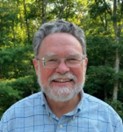
Mark Hahn, Ph.D., is a Senior Scientist in the Biology Department at the Woods Hole Oceanographic Institution (WHOI) in Woods Hole, MA, USA. He received a BS in Biological Sciences from SUNY Binghamton (1980) and a PhD in Environmental Toxicology from the University of Rochester (NY) School of Medicine and Dentistry (1988). Dr. Hahn’s research group studies the molecular mechanisms and evolution of the aryl hydrocarbon receptor, mechanisms of adaptation and evolved resistance to chemicals in fish, and the developmental toxicity of harmful algal bloom toxins. Dr. Hahn has been a project PI in the Boston University Superfund Research Program and the Woods Hole Center for Oceans and Human Health (WHCOHH). Web site: https://www2.whoi.edu/site/hahnlab/

Ellen Mihaich, Ph.D. has worked in the pesticide/chemical industry for over 30 years (36 to be exact). She is the owner of Environmental and Regulatory Resources, LLC, an environmental consulting company specializing in environmental toxicology, risk assessment, and regulatory services. Prior to this position, she worked for Rhone-Poulenc and then Rhodia as an environmental toxicologist responsible for pesticide/chemical development and risk assessment. She received a B.A. from Wellesley College and M.S. and Ph.D. degrees from Duke. She is a past president and current Fellow of SETAC and a Diplomate of the American Board of Toxicology.
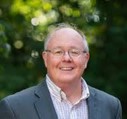
Charles D. Rice, Ph.D. is a Professor in environmental toxicology at Clemson University. His career as an environmental toxicologists started as a graduate student in the mid-1980s when studying Kepone resistance in Fundulus heteroclitus in the James River near Hopewell VA. Towards the end of the program, he discovered immunology and soon met people in the field of immunotoxicology. He then pursued a Ph.D. at VIMS to study marine immunology and toxicology and focused on Tributyltin. Following a post-doc in tumor immunology to advance skills and knowledge in basic immunology, he joined the faculty of the Vet School at Miss State University and pursued comparative immunology and immunotoxicology. In 1993 he joined Clemson and the rest is history.

Daniel Schlenk, Ph.D. is a Distinguished Professor of Aquatic Ecotoxicology and Environmental Toxicology at the University of California, Riverside. A Fellow of AAAS and SETAC, he has served as a permanent member and chair of the USEPA TSCA Chemical Safety Advisory Committee and the USEPA FIFRA Science Advisory Panel. He is currently an Executive and Associate Editor for Environmental Science and Technology, and ES&T Letters. He has published 400 peer reviewed publications on the fate and effects of contaminants in wildlife and humans.
Speakers
Session 1 – Ecotoxicology and risk assessment

Audrey Bone, Ph.D., is a Senior Scientist at Bayer Crop Science located in Chesterfield, MO. She is an environmental toxicologist and risk assessor with experience in ecological risk assessment for crop protection products, North American and global regulatory issues, and FIFRA ecotoxicity study requirements. Her technical expertise includes aquatic and terrestrial vertebrate toxicology, new approach methods, and endocrine disruption. She is an experienced GLP study monitor for OECD/OCSPP ecotoxicology studies and study director for pollinator-relevant matrix residue studies. She earned her PhD in Rich’s lab in 2015.

Bryan Clark, Ph.D., is a molecular ecotoxicologist with the Atlantic Coastal Environmental Sciences Division of the US EPA Office of Research and Development. His research group uses the mummichog in work that seeks to identify molecular responses to stressors and connect them mechanistically with ecologically important apical impacts. He currently leads projects focused on field-based population genetic and community responses to contaminant remediation and laboratory efforts to identify mechanisms of PFAS toxicity and stress responses that can ultimately be connected to predictive ecological population models.

Lindsay Garner Ph.D., is a Principal at Catalyst Environmental Solutions. She is a project manager, CEQA/NEPA practitioner, and environmental toxicologist with 15 years of aquatic and terrestrial toxicology, water resources, permitting, litigation support, and risk assessment experience. She has worked on a variety of large and complex projects involving multiple stakeholders, including environmental compliance for habitat restoration, invasive species management, pest management, dam safety improvement, geothermal development, single-use plastic reduction measures, and oil and gas development projects throughout California and the west. She earned her PhD in Rich’s lab in 2011.

Tara Raftery, Ph.D., is an Aquatic Ecotoxicologist at BASF Corporation – Agricultural Solutions where she performs screening and higher tier ecological risk assessments, plans and monitors studies, and provides support for plant protection products globally. She has a Ph.D. in Environmental Health Sciences from the University South Carolina and completed postdoctoral training at Duke University and the US EPA. She enjoys mentoring other scientists and is passionate about maintaining a fulfilling career while also balancing family life.
Session 2 – Research frontiers in ecotoxicology

Jessica Brandt, Ph.D., is an Assistant Professor at the University of Connecticut in the Department of Natural Resources and the Environment & the Center for Environmental Sciences and Engineering. Her research program focuses on contaminant dynamics in freshwater and coastal food webs. She earned her PhD in Environmental Health from Duke University in 2018, her MHS in Environmental Health Sciences from the Johns Hopkins Bloomberg School of Public Health in 2012, and her BA Public Health from Johns Hopkins University in 2011.

Cole Matson Ph.D., is an Associate Professor of Environmental Science at Baylor University. Dr. Matson is an ecotoxicologist specializing in evolutionary toxicology. In particular, he studies how chronic contaminants exposures drive genetic adaptation in fish populations inhabiting heavily contaminated aquatic ecosystems.
Session 3 – Beyond ecotoxicology

Tom Augspurger, Ph.D., is the Deputy Assistant Regional Director of the US Fish and Wildlife Service’s Gulf Restoration Program. Within that Program is the Office of Gulf Restoration which led part of the Deepwater Horizon oil spill damage assessment and now works with many partners supporting restoration throughout the Gulf. The program includes the Southeast Office of Natural Resource Damage Assessment and Restoration — providing that expertise throughout the region. Giving back to the profession he has enjoyed, Tom volunteers as the chair of the North Carolina Secretaries’ Science Advisory Board, has served in leadership of the Society of Environmental Toxicology and Chemistry, and helps students as an adjunct associate professor in the Department of Biological Sciences’ Toxicology Program at North Carolina State University. He enjoys about anything outdoors — especially fishing, kayaking, shelling, and birding.

Daniel Brown, Ph.D., is a Senior Toxicologist and Program Manager at Consolidated Safety Services Inc. (CSS), where he supports the National Toxicology Program through scientific audits, data integrity reviews, and regulatory assessments. He earned his Ph.D. at Duke University in Dr. Richard Di Giulio’s lab as part of the Integrated Toxicology and Environmental Health Program (ITEHP), where his research examined the physiological tradeoffs of pollution adaptation in killifish. Dr. Brown later returned to Duke to evaluate the safety of consumer arts and crafts products as part of the Toxicology Program under Dr. Chester Rodriguez. His career continues to be shaped by the mentorship and scientific values instilled by Dr. Di Giulio and the ITEHP community.
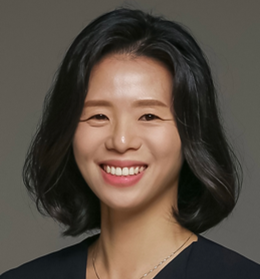
Dawoon Jung, Ph.D., is a Research Fellow at the Korea Environment Institute (KEI), where her work focuses on strengthening environmental health governance at both local and national levels. Her research emphasizes the integration of vulnerable populations—particularly infants and children—into environmental policy frameworks. She has led efforts to develop environmental health indicators for local governments, improve indoor air quality management, and apply Next Generation Risk Assessment (NGRA) frameworks in chemical regulation. Dr. Jung has actively contributed to national policy discussions and cross-sector l initiatives aimed at advancing environmental health governance and promoting innovative risk assessment methodologies.

Jordan Kozal, Ph.D., completed her doctoral degree at Duke University’s Nicholas School of the Environment in 2018. While at Duke, she was in the ITEHP program and in Rich’s lab. Since graduation, Dr. Kozal has worked as a scientific consultant focusing on toxicology and risk assessment, including both environmental and human health. She is currently a Senior Consultant at Integral Consulting Inc. Her consulting practice is focused on product stewardship and sustainability. Through her work, she has evaluated potential health hazards and risks from exposure to a wide range of environmental contaminants, industrial chemicals, food and feed additives and contaminants, dietary supplements, pharmaceuticals, over the counter drugs, medical devices, wearable devices, personal care products, and cosmetics.

Andrey Massarsky, Ph.D., earned his doctoral degree in 2014 from the University of Ottawa (dissertation on toxicity of silver nanoparticles in fish using in vivo and in vitro models). Thereafter, he pursued a postdoctoral position at Duke University from 2014 to 2018. During his time at Duke, he investigated the applicability of the zebrafish embryo model to study effects of total particulate matter from cigarette smoke on early development. In 2018, Dr. Massarsky joined Cardno ChemRisk now Stantec as a health scientist. As a consultant, he focuses on environmental and human health risk assessments.

David Watson Ph.D., joined Rich Di Giulio’s lab at Duke in the fall of 1989. His first meaningful contribution was to help pack up and move laboratory equipment from the old Biological Sciences Building to the newly opened Levine Science Research Center. In true multitasking fashion, he turned in his final dissertation just after midnight in 1995 — and a few hours later, welcomed his second child into the world. After a postdoctoral fellowship at NIEHS with Ken Tindall, Dave spent 19 years at Eli Lilly, leading the Molecular Toxicology Laboratory and helping advance new therapies for hepatitis C, type 2 diabetes, and cancer. In 2018, he founded Resero Analytics, where he leads a team of scientists and software engineers who build web applications that support nonclinical and clinical drug development.