
PhD Program: Environment (2021)
Faculty Advisors: P. Lee Ferguson, PhD; Heather Stapleton, PhD
Dissertation: Characterizing Exposures and In Vitro Effects of Azobenzene Disperse Dyes in the Indoor Environment
Employment: Acting Trans-NIH Metabolomics Coordinator, The National Institute of Environmental Health Sciences
Employment Sector: Government
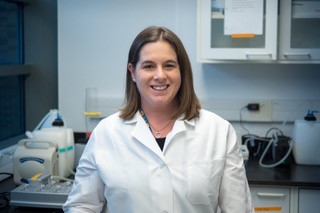
Description of Research: I am an environmental health researcher dedicated to exploring health implications of emerging environmental contaminants and other chemicals through metabolomics and exposomics: I seek to understand what chemicals are present in our environments and our bodies, and to understand the health consequences that might occur from exposures to these chemicals. Primarily, I utilize high resolution mass spectrometry in tandem with other computational and biochemical/bioanalytical tools to identify presences, elucidate structures, measure abundances, and evaluate possible health implications of small molecules using weight-of-evidence approaches. In my current role as a chemist in the Metabolomics Core Facility (MCF), and as acting Trans-NIH Metabolomics Coordinator, I collaborate with researchers from diverse labs throughout the National Institute of Environmental Health Sciences (NIEHS) and, more broadly, throughout the National Institutes of Health (NIH), to design, carry out, and analyze untargeted metabolomics and exposomics experiments. My current research investigates best practices for de novo chemical annotations, mapping, and networking of mass spectrometry data for large-scale untargeted metabolomics and exposomics research projects, particularly with respect to previously-unrecognized exogenous compounds or endogenous compounds that are difficult to annotate. Previously, my doctoral research at Duke University examined the occurrences, human exposure potential, and toxicological potential of azobenzene disperse dyes, a class of emerging contaminants of concern.
LinkedIn: https://www.linkedin.com/in/kirsten-overdahl-phd-4380b974/
You may also like

Emily S. Bernhardt, PhD Nicholas School of the Environment Focus areas: Profile: https://nicholas.duke.edu/people/faculty/bernhardt Lab Website: https://bernhardtlab.weebly.com/

Jason Somarelli, PhD School of Medicine My research team focuses on understanding the molecular constraints of living systems in extreme environments, including […]
Pronouns: she / her / hers PhD Program: Genetics & Genomics (2007) Faculty Advisor: Randy Jirtle, PhD Dissertation: Epigenetic Gene Regulation: Linking Early Developmental Environment […]

Danny Schust, M.D. School of Medicine: Obstetrics and Gynecology Studies very early pregnancy by modeling human placental development in the lab. Focus […]