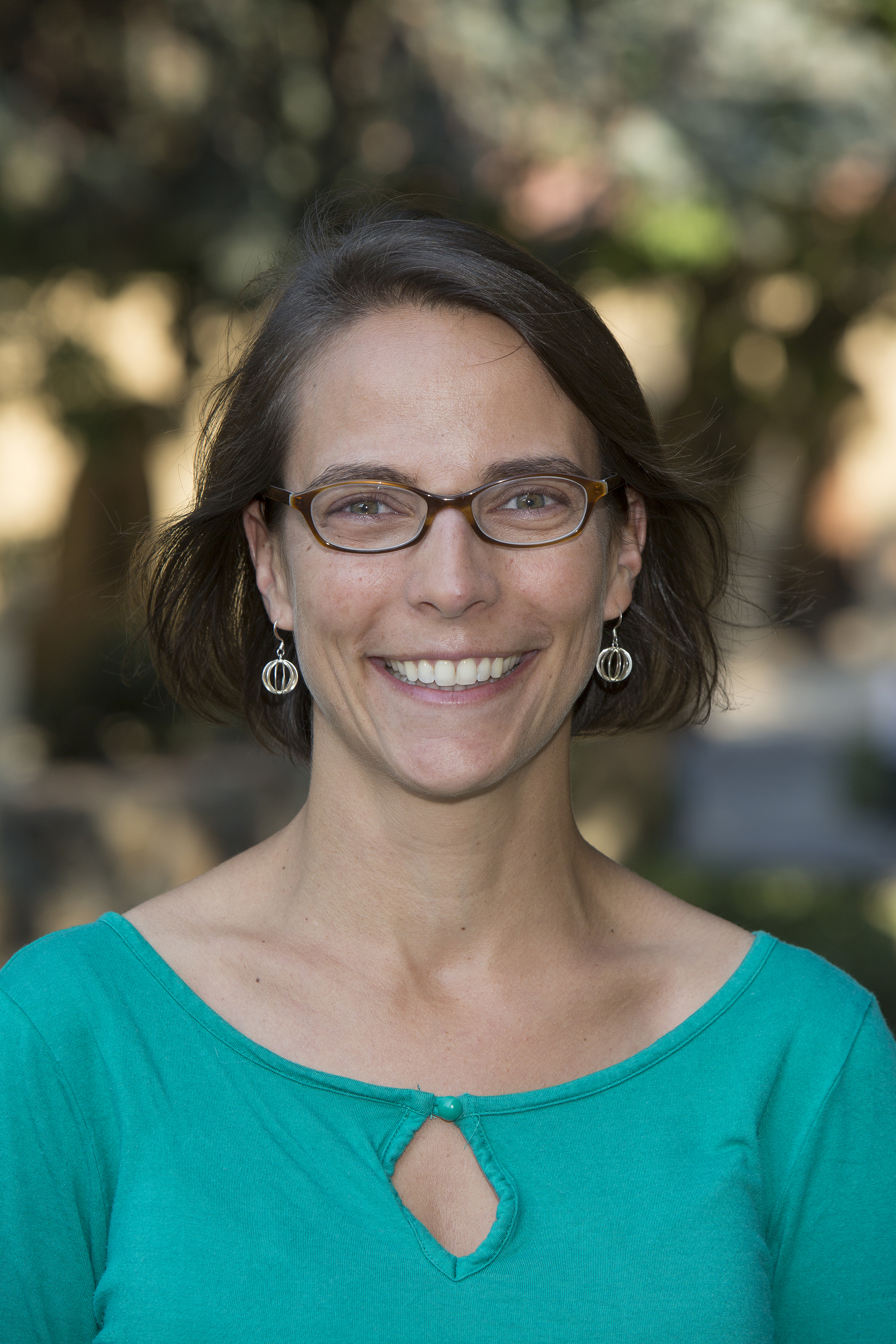
Interview by Julie Furr Youngman, T’87, SOE’94, JD’94
Dr. Chad Nelsen is the CEO of Surfrider Foundation, a national nonprofit dedicated to the protection and enjoyment of the world’s oceans. He grew up on the coast of California, surfing, swimming, fishing, and, for his first job, lifeguarding at Laguna Beach. He earned an MEM with a concentration in Coastal Environmental Management at Duke’s Nicholas School and later earned a doctorate at UCLA on the economics of coastal recreation and surfing to help ensure that our oceans, waves and beaches are valued appropriately. He has worked at Surfrider since 1998, serving as an activist and later Environmental Director, and eventually rising to lead as CEO in 2014.

Tell us a little bit about your time at Duke.
I had been working at the USGS doing geology, using my undergraduate major. I loved it, but was interested in making a change. I was early in my career, so my interests were pretty broad at that point. A family friend and mentor from Yale School of Forestry told me I should check out this cool new program at Duke. I did and discovered the coastal MEM program. I grew up at the beach as a surfer and lifeguard in Southern California, and my dad was an ocean science educator. I hadn’t realized I could match my love and interest in the ocean with my professional goals in conservation until I read about the program and realized it was exactly what I wanted to do. I applied and got in as part of only the second cohort in the coastal MEM program.
What did it mean to you to be a part of that program?
It changed my life in a lot of ways. First, I was a science and math nerd, but so many of the available environmental jobs were policy jobs. The Duke program helped me learn to work in the interstitial space between scientists and policy makers and communicate with both. Also, the Duke program really opened my eyes to all the professional opportunities at the coast. I felt like my aperture in terms of what a coastal and ocean profession could look like really expanded. I remain indebted to Karen Kirchof, who was in charge of career services. She’s no longer with us, but she was extraordinary.
What was your path when you graduated?
After my first year, I was a broke grad student, hoping to do something meaningful but needing to earn money. I worked for a marine science summer camp in Laguna Beach, which paid the bills but wasn’t aligned with my professional goals. So I also volunteered at the Surfrider Foundation and became really interested in coastal physical processes. I’d taken Orrin Pilkey’s famous Carolinas field trip class, plus a class on coastal geomorphology with Peter Howe. I was really interested in beaches and coastal dynamics, and so I did a research project on using artificial surfing reefs to manage coastlines, which turned into my master’s project. I was fascinated by coastal processes and coastal zone management, but Surfrider didn’t have any openings when I graduated, so I did a two-year NOAA fellowship at Oregon’s coastal program. And then the luckiest thing happened—a job opened up at Surfrider just as my fellowship was ending. Because of my experience in Oregon, and particularly the GIS work it involved, I landed the job. I never looked back—I’ve been at Surfrider ever since.
When did you first realize that your work could change the world?
When I started at Surfrider, I realized really quickly that the three legs of the successful coastal zone management stool are science, policy, and the public. At Duke, I learned how to translate science and policy, and Surfrider was great at that third leg. I learned how to communicate science and policy to the public because Surfrider is so great at engaging the public who are passionate about surfing, coastal recreation, and the coast. That was the piece that made me feel like, OK, this is how we’re going to change the world. In the current state of politics, there’s often a disconnect between what people want and what’s happening, and I think it’s because they’re not participating. Surfrider is really good at helping people participate in important decision-making processes.
What’s an uncomfortable truth you’ve had to accept?
Being right doesn’t matter if nobody believes you. We see this with climate change issues, and we have a long way to go to get people to really understand what’s going on in our oceans and coasts. Last fall, I watched with sadness the massive coastal erosion and houses literally falling into the ocean and littering the beaches at Buxton, NC. Buxton is among the best surfing areas on the East Coast, but now it’s closed to the public because of those hazards. That erosion was happening 30 years ago when I was visiting with Dr. Pilkey, and people were already placing sandbags to protect houses, but they weren’t taking Dr. Pilkey’s warnings seriously. For at least 30 years, there have been scientists and lawyers and coastal zone management people who understand what’s causing these kinds of crises, yet we’re not doing a great job of communicating and addressing the problem in a meaningful way, so houses are falling into the ocean. And it’s not exclusive to North Carolina: houses are falling off the bluffs into the ocean in California and the North Shore of Hawaii near Pipeline, a famous surf spot. That portends big challenges with the acceleration of sea level rise.

How have you molded Surfrider’s mission and work?
The mission is the protection of the world’s ocean, waves and beaches, for all people, through a powerful activist network. We’re a conservation group and also a recreation group. We want people to get out there and enjoy the coast. We have a powerful grassroots network of volunteers and chapters in almost every coastal state, from Florida to Maine and North Carolina to California, working at the local, state, and federal levels. Our method to spark change is to get people who love our coasts to become stewards and advocates for them, whether that’s cleaning the beach, testing water, or advocating for policies. We believe that successful protection for coasts and oceans requires an active and engaged public, so we provide avenues for people to get involved and ensure experts are providing science-based leadership on the arcane policy and legal issues relevant to our coasts and oceans.
My role has changed over my 30-year career at Surfrider. I started out running our water testing program, then became the environmental director, where I organized our science and policy work into five buckets: beach access, water quality, plastic pollution, climate change, and ocean protection. For the past 11 years, I’ve been CEO of Surfrider. During that time, we’ve built out staff across the country to support our chapters and volunteers. One of our primary focus areas is adapting our coasts to the impact of climate change: restoring habitats like dunes, wetlands, and mangroves to make coasts more resilient; using nature-based solutions for coastal adaptation; and creating policy frameworks to manage the impacts of climate change and sea level rise.
Do you have thoughts about solving a particularly thorny problem?
We are not ready to deal with climate change on our coasts. We’re going to have to decide whether to protect only publicly-owned coastal property, or whether to save all of the coast. That’s an evocative question. In places where we have publicly owned property, it should be easier than it is – like when Cape Hatteras National Seashore moved a lighthouse back from an eroding beach. It’s even more challenging where we have privately-owned oceanfront property because we have to think about complex legal issues like whether forcing people to retreat is a government taking. We’ll have to get rid of simple incentive programs and make massive public investments in saving the coastline. We won’t, for instance, be able to count on people to voluntarily relocate or demolish their own oceanfront homes to avoid creating a public hazard when they collapse; we may have to buy people out. Unfortunately, oceanfront property is some of the most valuable property on earth. In some cases, people have owned a house for a very long time or count on highly profitable rent, so there’s this value there that’s been accumulated. We have this tension between private property interests right on the coast and this public interest or benefit that’s right adjacent to it. I feel like we’re on a treadmill and need to figure out alternatives so we don’t end up armoring the coast or doing beach nourishment forever. I’m watching California where we have successful coastal adaptation projects moving structures back from the coastline. My hope is that, even if people don’t agree on the cause but they recognize that what’s happening, they may still be willing to act.
What’s a difficult leadership lesson you’ve had to learn?
I’ll give you two. The first one was learning to transition from someone who is doing the work to being someone who empowers others to do the work, becoming the thinker versus the doer. For most of my career, I was the one writing reports and leading projects, and a lot of my self-worth was caught up in being the expert in doing the work. When I became a leader, my job wasn’t to do those things anymore, but rather to make sure that my team has the resources and vision to succeed at doing things themselves. The other hard lesson was learning how to effectively communicate the vision of where we’re heading. You might think, “We should get involved in climate change and here’s what that should look like.” I think of myself as being a good communicator, but I still had to learn to look ahead, communicate the direction we’re heading, and take the time to make sure everyone believes and understands and embodies it in their work, versus just saying it and wondering why everyone isn’t doing the work that I thought we all agreed to do. I rely a lot on principles that I learned at Duke about letting the science lead and then being an effective communicator.
What advice do you have for students who want to follow in your footsteps?
I would say try everything, do internships, get exposure because it’s a big, broad world out there. I worked for the federal government, state government, and NGOs and I ended up gravitating towards an NGO, but another classmate has built an incredible career in the federal government doing fisheries management. You’ve got to find the career that matches you and your interests. My other advice is to seek out mentors. I have benefited incredibly from mentors—I sought those people out and observed them, asked them questions, and engaged with them, and they all gave me a lot of good advice about what’s possible. That was all really enriching.