
Agricultural headwater streams and ditches commonly host dense stands of aquatic vegetation that grow and decay over seasons and exert physical and biological controls on the transport of nutrients from cropland to larger rivers. This study examined changes in the transport of phosphorus (P) in an agricultural drainage ditch in the Maumee River Basin (Ohio, USA) by conducting constant rate injections of a novel tracer mixture (conservative salt [Cl as NaCl], dissolved P [KH2PO4], and a fluorescent fine particle) in spring, summer, and fall. We quantified transport behavior for solutes and particles using a traditional transient storage modeling framework consisting of mobile and immobile storage zones connected by a first-order exchange rate constant. Transient storage was greatest during the spring, when thicker vegetation caused more pooling and flow stagnation, and decreased through fall, as vegetation thinned. Soluble P uptake lengths were 8.7 times longer in fall than spring, likely due to declines in biological uptake rates with colder temperatures and immobile zone storage with thinning vegetation. Particle capture lengths also decreased by a factor of 4.3 from fall to spring. With the increasing eutrophication of Lake Erie and waterbodies around the world that lie downstream from agricultural landscapes, it is beneficial to understand nutrient transport across watersheds, including small agricultural streams. This study highlights the physical and biological roles that aquatic vegetation plays in small agricultural streams by creating seasonally variable immobile zones that slow the flow of nutrients, providing surface area for biofilms, and capturing particles that bind nutrients.
AUTHOR

Zackary Johnson
68 postsYou may also like

Salmonid feeds can be formulated with high quality microalgae to maintain sustainability in the aquaculture industry. But, the suitability of different microalgae […]

Johnson announced a Sustaining Fellow of the Association for the Sciences of Limnology and Oceanography (ASLO). ASLO Sustaining Fellows are recognized as […]
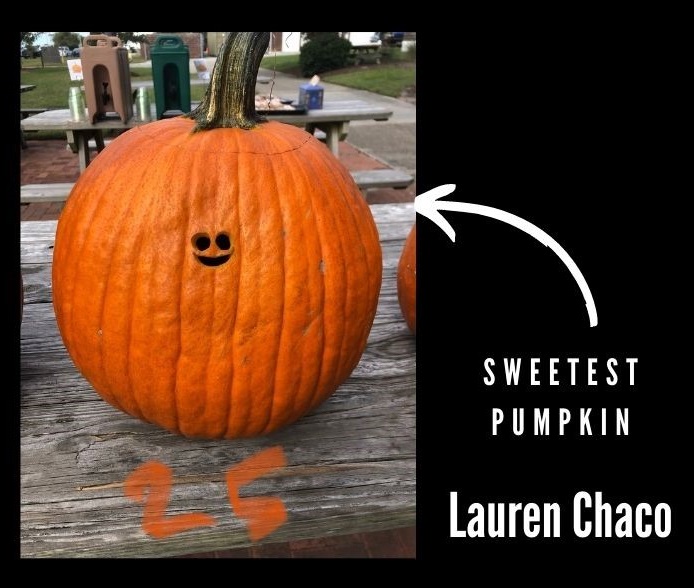
While disappointingly not algae related….unless it is….Lauren was a winner at the 2020 DUML pumpkin carving competition. Well done!
The Johnson Lab was selected for a Spark Award for pilot demonstration of carbon capture/storage technology based on ABECCS (Algae with BioEnergy […]