

“We have progressed well beyond the empty forest to early views of the ‘empty landscape’ in desert, grassland, savanna, and forest ecosystems across much of planet Earth.” – William Ripple
This is the conclusion that Ripple and his colleagues reached when reviewing the state of the world’s large herbivore populations. Similar observations have been made in reviews of apex predator populations, and large-animal extinctions represent the anthropogenic defaunation of the planet writ large. Efforts to counter the decline in large-animal populations have culminated in several approaches, chief among them rewilding—the reintroduction of locally extinct species to their former native ranges.
The logic behind rewilding is compelling: well-protected breeding populations can be used to recover and rehabilitate large areas that have lost the ecological functions once maintained by large herbivores and apex predators. However, the implementation of rewilding faces both practical (e.g., How do you reintroduce large animals?) and philosophical (e.g., What species can ethically be reintroduced in places where people live?) challenges.
Our aim at Team Rewild is to harness the skills and capacities of Duke students to address these challenges and assist in restoring species to their historic ranges. The Rewilding Team is a community of Duke students passionate about conservation, biodiversity, and habitat connectivity. The broad range of expertise within the Duke student body—from environmental policy and ecology to business and finance—gives us a unique capacity to tackle the complex problems that rewilding presents. We hope to connect with conservation and restoration practitioners engaged in this work across the state and to contribute to rewilding research, fieldwork, and discussion centered on projects in North Carolina.
Would you like to get involved or hear more? Please reach out to our student leaders!
Current Projects

Faculty Advisor
Faculty Advisor

2nd Year Lead

1st Year Lead
We’re monitoring wildlife recovery on a landscape-scale restoration project

We’re working on a 5,000 ha drained pocosin peatland in eastern North Carolina to explore how restoration through rewetting and the concurrent reestablishment of an apex predator (red wolves) impact vegetation and wildlife recovery. This work is being led by PhD student Mike Landis and faculty advisors Jason Donaldson and Brian Silliman.
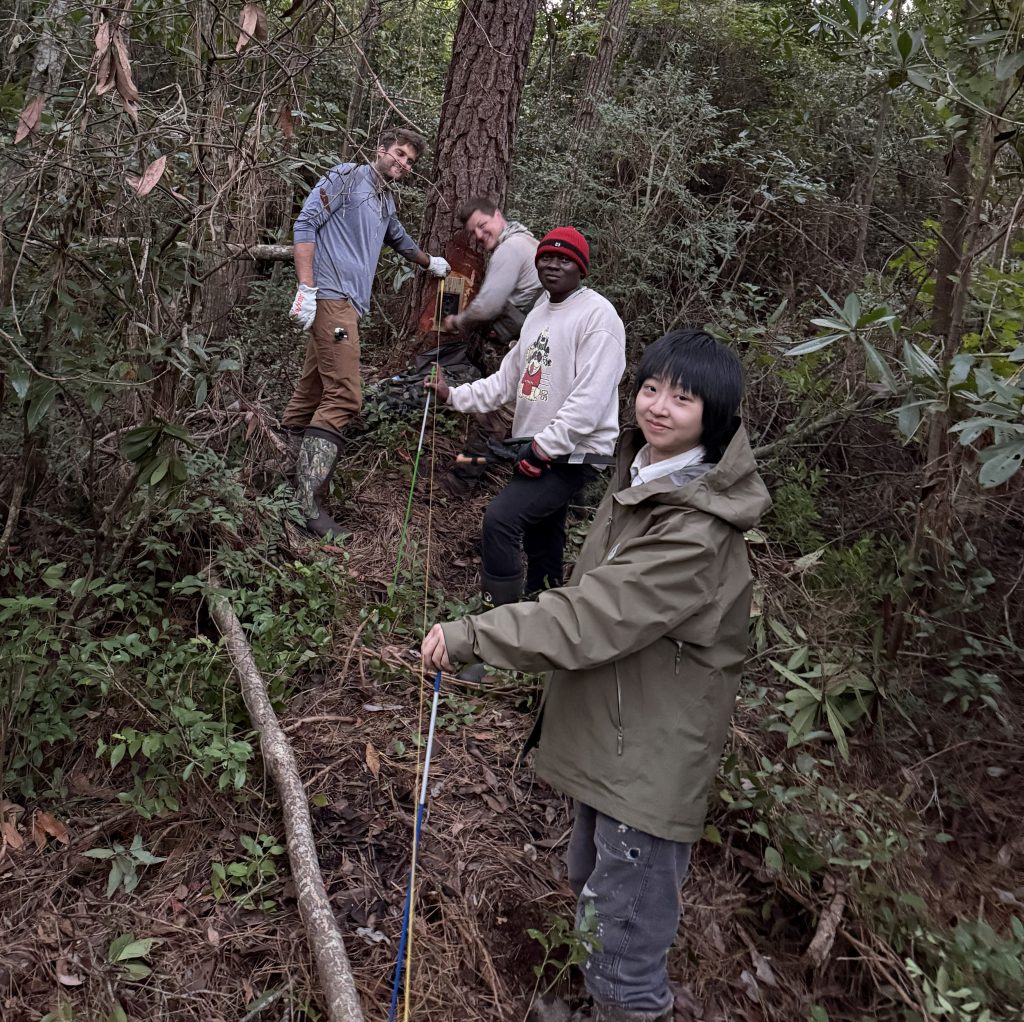
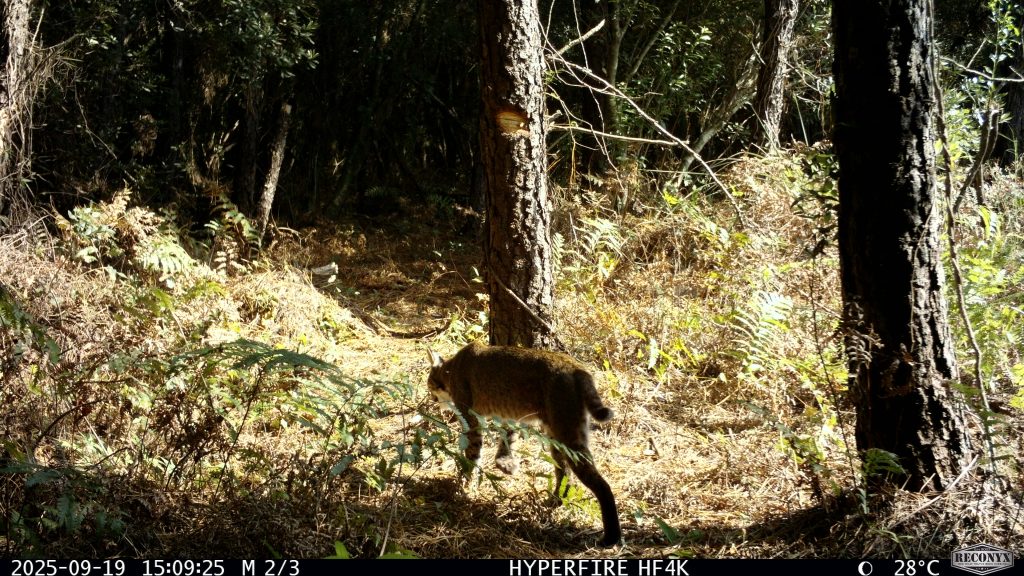
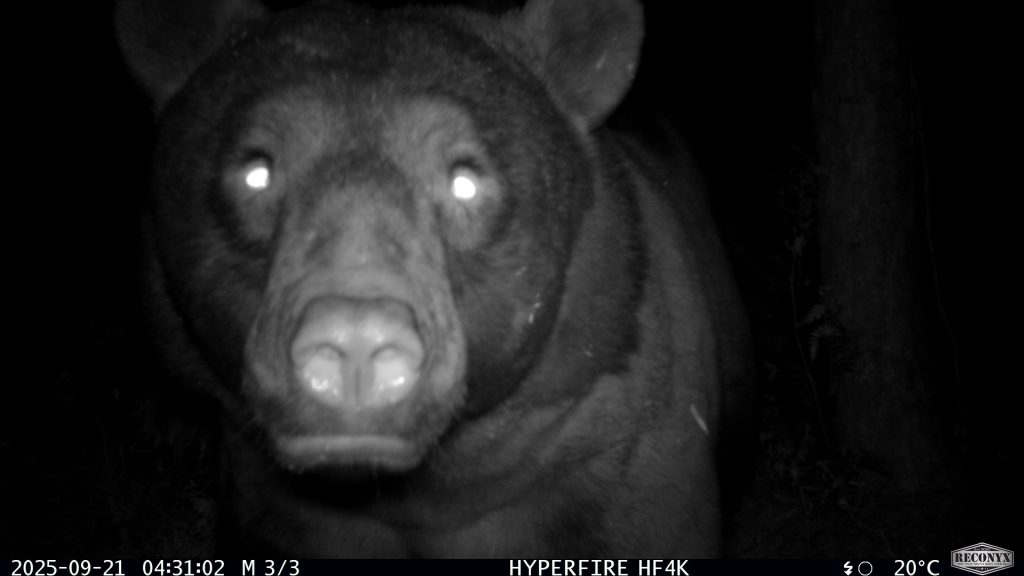
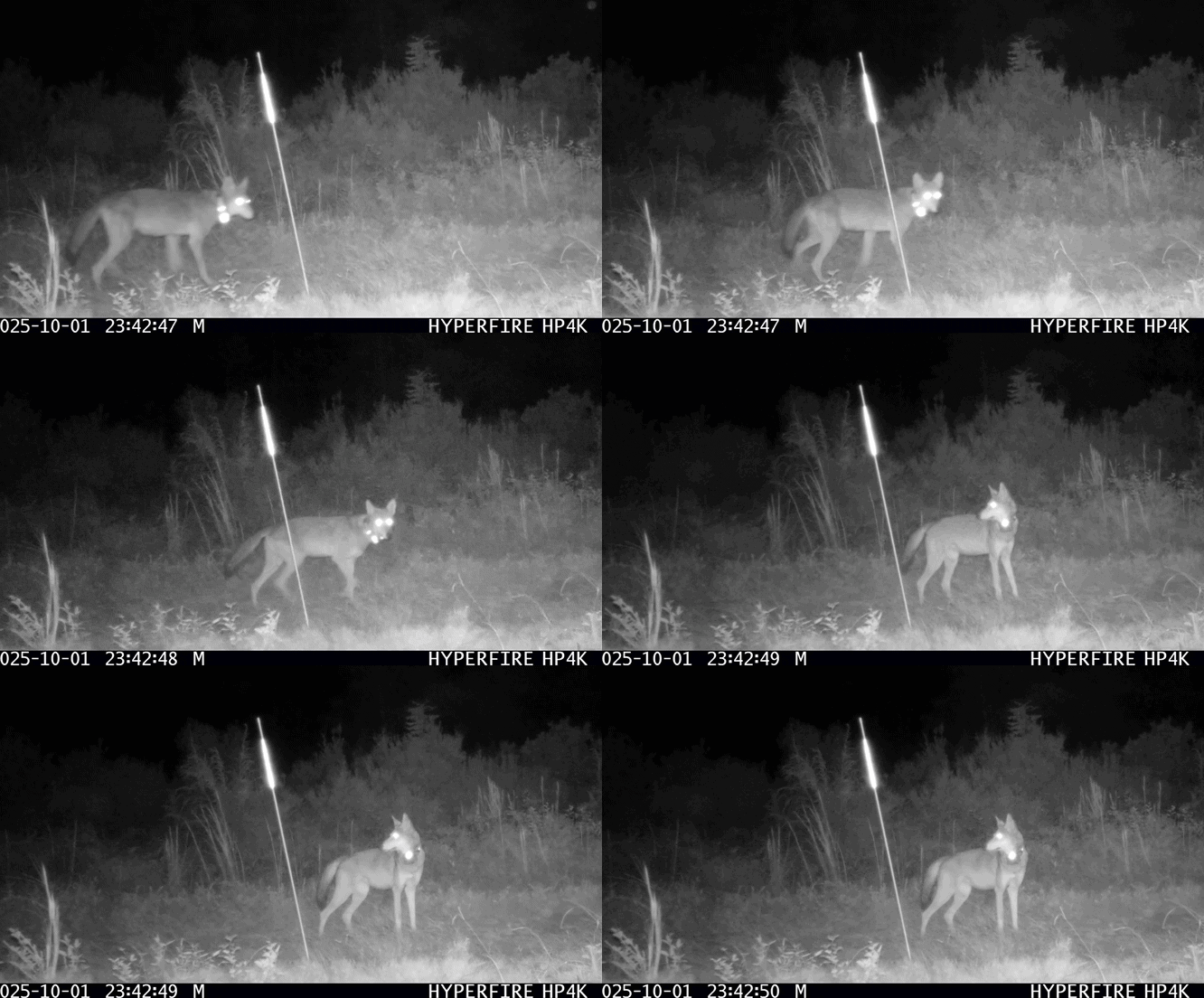
Students from Team Rewild recently helped set up a large camera trap array and will soon be involved in tracking vegetation and wildlife change over time. Our camera traps have already been visited by bobcats, black bears, and the main act – red wolves!
Past and Future Events
Peter Kareiva Visit (Oct 2025):
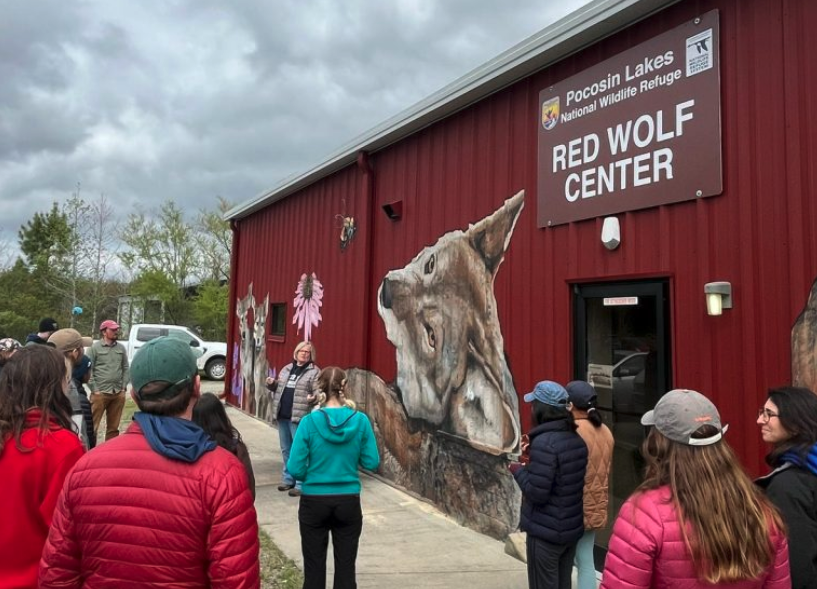
We were recently joined by Dr. Peter Kareiva, whose powerful seminar on wolf restoration reframed rewilding as a form of ecological renewal rather than simple species recovery. Through his leadership founding Team Wolf, Dr. Kareiva highlighted how targeted predator reintroductions can serve as strategic levers for ecosystem restoration catalyzing trophic cascades, regenerating landscapes, and redefining the relationship between human systems and the wild.
Grant Fowlds Visit (Oct 2025):
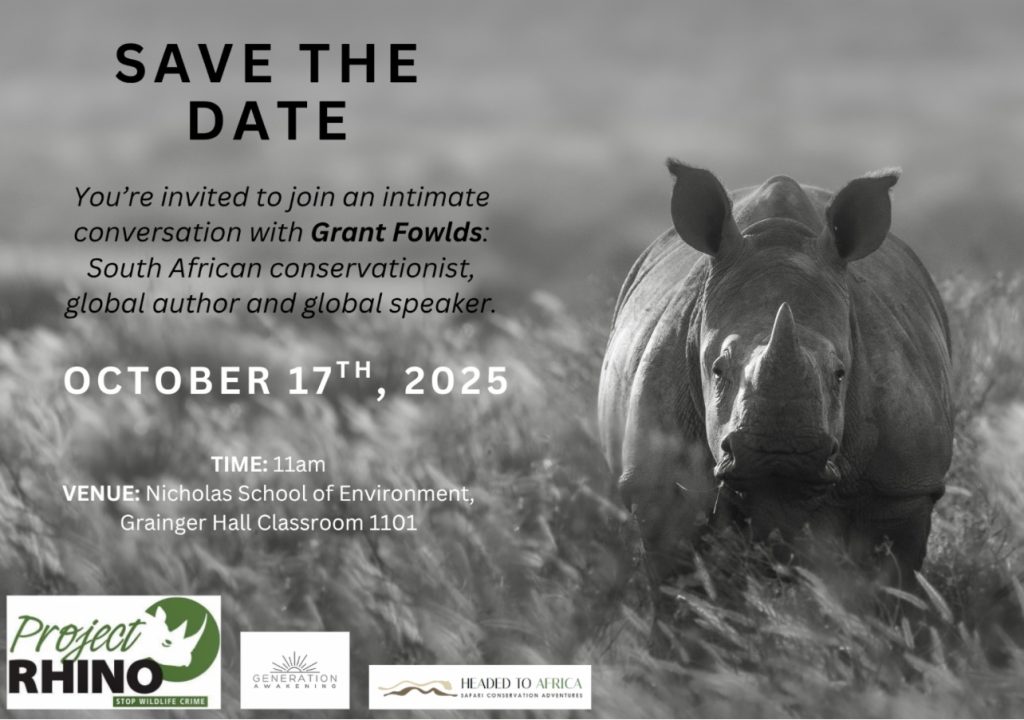
Team Rewild had the honor of hosting renowned rhino conservationist Grant Fowlds, who shared gripping stories from the frontlines of rhino rewilding in southern Africa. His talk illuminated the intricate blend of ecology, innovative management, and community strategy required to restore species once extirpated from the landscape, reminding us that rewilding is as much about people and place as it is about wildlife.