
The Johnson Lab was selected for a Spark Award for pilot demonstration of carbon capture/storage technology based on ABECCS (Algae with BioEnergy Carbon Capture and Storage). As atmospheric carbon dioxide concentrations continue to rise there are substantial negative impacts to the environment and societies across the globe. Beyond just reducing future emissions, Intergovernmental Panel on Climate Change (IPCC) projections demonstrate that active carbon dioxide removal technologies will be needed to maintain climate within tolerable levels (+2°C). With their fast growth and utilization of atmospheric/oceanic carbon dioxide, microalgae offer a potential solution to this grand societal challenge. This project will demonstrate at pilot scale a combined system that utilizes waste forest products (bark/sawdust) to generate CO2 that is transformed and integrated using calcium carbonate, which in turn will be used to efficiently grow algae for the production valuable bioproducts while durably sequestering carbon. A preliminary analysis of the combined process shows it to be carbon negative and economically viable.
AUTHOR

Zackary Johnson
68 postsYou may also like

While disappointingly not algae related….unless it is….Lauren was a winner at the 2020 DUML pumpkin carving competition. Well done!

Expanding markets for microalgae and macroalgae products have led to increased development of commercial farming operations. While microalgae and macroalgae, or seaweed, […]

The Marine Microbe Group (Johnson and Hunt Labs) at the Duke Marine Laboratory has been awarded a NSF project (#1416665) to study […]
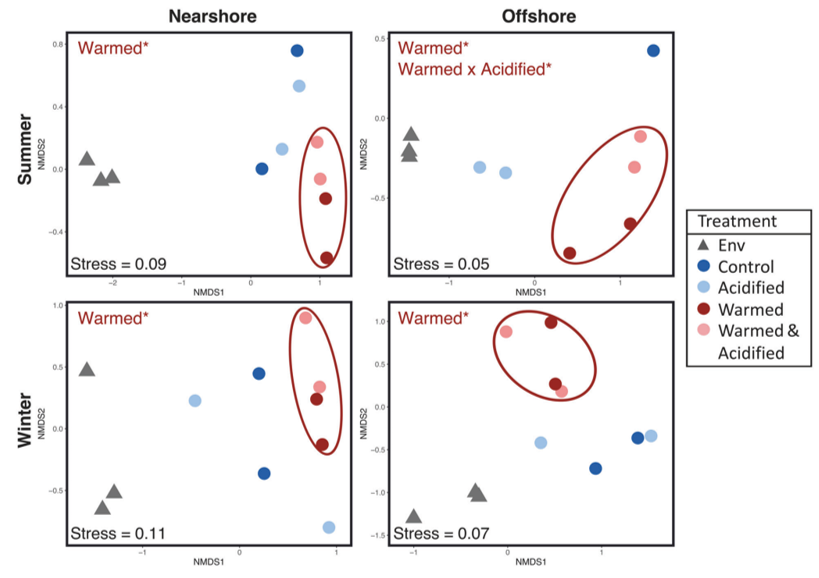
Ambient conditions shape microbiome responses to both short- and long-duration environment changes through processes including physiological acclimation, compositional shifts, and evolution. Thus, […]