
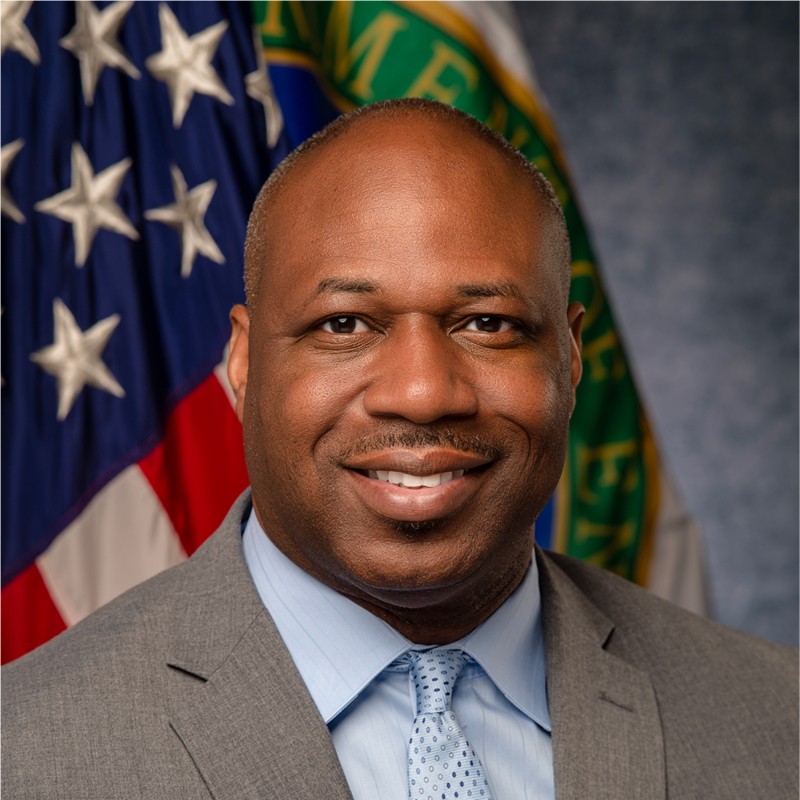
Interview by Wendy Katua, MEM Candidate, Class of 2027
Dr. Henry C. McKoy, Jr., DEL-MEM’11 and President and CEO of Carolina Community Impact (CCI), has built a trailblazing career at the intersection of energy, economic development, and inclusive finance. A nationally recognized leader and former Presidential appointee under the Biden Administration, Dr. McKoy served as the founding Director of the U.S. Office of State and Community Energy Programs at the Department of Energy, where he oversaw a $16 billion portfolio that touched the lives of over 250 million Americans. His career spanning roles in state government, academia, banking, and entrepreneurship reflects an unwavering commitment to using capital, innovation, and policy to build a more sustainable and equitable future. Today, through his leadership at CCI, Dr. McKoy continues to redefine what community investment and environmental stewardship can look like in a rapidly changing energy landscape.
What first drew you to the field of sustainable energy and environmental management?
Early in my career, I wanted to help people achieve economic mobility and better quality of life. But as I looked at the bigger picture, I realized that if everyone in the world lived the way we do in America, we would destroy the planet. That insight shifted my focus to how we can build systems and businesses that honor the planet instead of harming it. That’s where I became fascinated by the idea of the triple bottom line (people, planet, and profit) and how capital can be used as a force for good.
You came to Duke after an extensive career in banking and public service. What experiences at the Nicholas School most influenced your worldview?
My time at Duke was transformative because it directly connected theory to real-world challenges. While serving as Assistant Secretary of Commerce for North Carolina, I was tackling energy policy, sustainability, and economic development every day, and my Duke coursework gave me tools I could apply immediately. Classes in environmental law, policy, and redevelopment helped me understand everything from Superfund site remediation to regulatory trade-offs. The Nicholas School helped bridge my private-sector experience with the policy world, and that integration was invaluable.
… As the saying goes, when you love what you do, you never work a day in your life. My North Star has always been simple. Use what you’ve been given to make the world a better place.
Dr. Henry C. McKoy
What does a typical day look like for you now?
No two days are ever the same, which I love! I start my day with a run along the American Tobacco Trail in Durham, then dive into meetings with partners, investors, and teams working on energy and sustainability projects. My work revolves around deploying capital for impact, thinking strategically about operational efficiency, growth, and how our projects can make a meaningful difference. Balance is key, though. I make time for family and reflection because, as the saying goes, when you love what you do, you never work a day in your life. My North Star has always been simple. Use what you’ve been given to make the world a better place.
What skills or mindsets do you think the next generation of energy professionals will need?
The future belongs to “T-shaped” people with both depth and breadth. You need deep expertise in a subject area, but also the ability to understand culture, technology, policy, and the marketplace. Be a constant learner. The problems we’re facing—climate change, energy transitions, social inequities—are complex and interconnected. You must be adaptable, innovative, and comfortable with uncertainty. And never underestimate the power of communication; the best technical idea won’t succeed if people don’t understand or trust it.
How do you see the clean energy transition affecting historically under-resourced or rural communities?
There’s both promise and challenge. Historically, the dirtiest forms of energy have impacted the poorest communities the most. I grew up near a large dump site. It was convenient, but it was also an environmental injustice. Clean energy offers an opportunity to correct those inequities by improving health outcomes and creating jobs. But we also must make sure clean energy is affordable and that those who lost jobs in fossil fuel industries can access new opportunities. True justice means ensuring no community is left behind.
What does true community engagement look like to you?
Real engagement isn’t doing something to communities; it’s doing it with them. That means involving people in the design of solutions, not just checking a box at a public hearing. During my time in government, I learned the importance of listening, especially to those whose voices often go unheard. We must move away from extractive engagement—where researchers take information and leave—and instead build partnerships that empower communities, compensate their expertise, and ensure they benefit from the outcomes.
What trends or innovations in energy excite you the most right now?
I’m fascinated by virtual power plants and distributed energy systems, how neighborhoods can share, buy, and sell energy among themselves using smart technology. This model doesn’t just improve efficiency; it can also put money back into people’s pockets. I’m also following advances in long-duration storage, quantum computing, and ways to make data centers more energy- and water-efficient. Innovation always creates new challenges, but that’s part of the journey toward a sustainable future.
What advice do you have for current MEM students at Duke?
Know your why. Figure out what drives you, what problem you want to solve, and let that passion guide your learning. Don’t just memorize; connect your studies to real-world issues. Every moment at Duke is a chance to learn from books, professors, and each other. Think differently about what everyone else sees. And remember, every generation should be smarter and more equipped than the last. That’s how we build progress with one inspired student at a time.
Any final reflections about your time at Duke?
The Nicholas School gave me a bridge between business, policy, and sustainability. I became the first and only student in the MEM program’s history to graduate early, in just three semesters! But more importantly, Duke gave me lifelong relationships and a renewed sense of purpose. It was one of the best decisions I ever made.