There are only so many things you can learn about aquaculture in a classroom. At the Duke Aquafarm in Atlantic Beach, N.C., students are wading into the water to conduct hands-on research to determine the best conditions for oyster farming.
Once valued strictly for timber, forestlands are now recognized for their impact on carbon sequestration, water quality, and wildlife habitats. Before NRFI, there was no program designed specifically to prepare leaders to help forestry organizations reach both their financial and stewardship goals.
The health of people and the planet are intertwined. Research conducted by the Nicholas School over the past year is answering questions about how air pollution, the use of pesticides, and the prevalence of forever chemicals may be affecting our health.
The Nicholas School is pioneering a transformative model that bridges cutting-edge environmental research with practical, market-ready solutions. This model works through rapid prototyping, market validation, and scalability, leading to real-world products and services that benefit people and the planet.
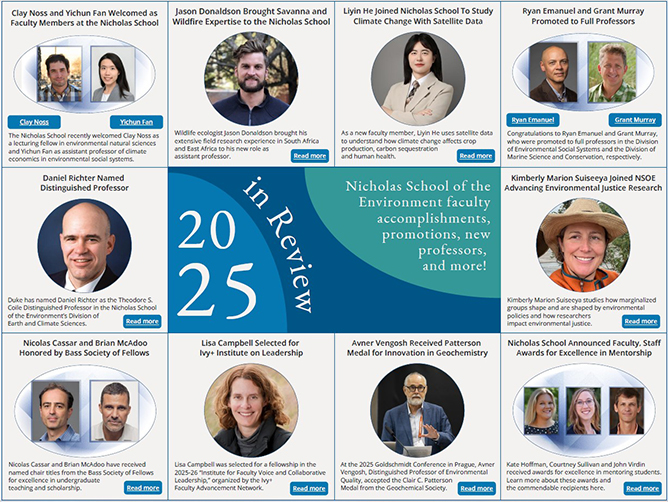
Reflecting on 2025, we are proud to spotlight the remarkable accomplishments of our faculty members and welcome new professors to the Nicholas School of the Environment. Read the report to learn more about these outstanding faculty and their expertise across numerous environmental fields.
Thanks to your support, the Nicholas School and Duke Marine Lab have engaged with thousands of students, educators, and community members through hands-on environmental programs, resilience initiatives, and STEM education. Our faculty and students are working to inspire the next generation of scientists and conservation leaders while addressing local environmental challenges, and none of this would be possible without you!